Introducing Materium
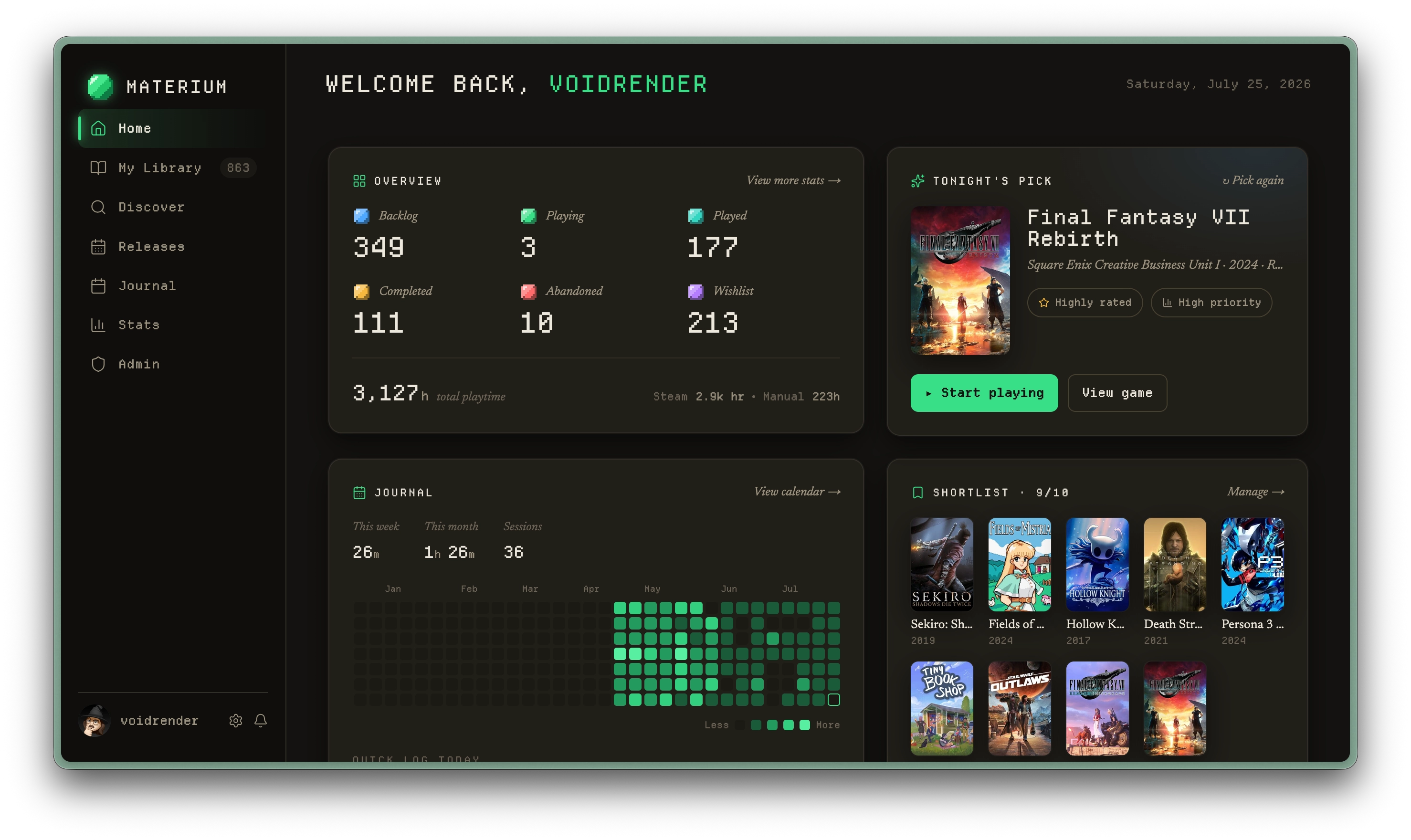
As with many Steam users, I own a lot of games. Add in PlayStation and Switch, and things get pretty complicated and scattered. Until now.
For years my collection lived in four places at once. Steam knew about the PC games, the PS5 knew about the PS5 games, the Switch knew about the Switch games, and a Notion database, oft-forgotten, knew about roughly a third of everything else. None of them talked to each other, and none of them could answer the only question I actually cared about on a Tuesday night: what should I play?
So in March I started building Materium. As of July 22, it’s live.
What it does
Materium is one dashboard for a collection scattered across platforms. Connect Steam and it pulls your library in with a single click, playtime included, and keeps it in sync. Everything else (PlayStation, Xbox, Switch, the shelf of physical carts behind you) gets added by hand, backed by IGDB so you’re picking real games with real cover art instead of typing titles into a void.
Once the games are in, six color-coded states do most of the organizing: backlog, playing, played, completed, wishlist, abandoned. One tap moves a game between them. That sounds trivially simple, and it is, but it turns out that most of the anxiety of a large collection comes from not knowing which pile a game is in.
A few other pieces I’m fond of:
- Play journal. Log a session with hours, notes, and spoiler-safe tagging. Steam playtime syncs itself, so the journal is for the parts a number can’t hold, like “I finally beat the first boss” or “I think I like this game, but I don’t know why.” I’ve been an avid Swarm user for years, and this is Swarm for games. I log a game nearly every single day.
- Tonight’s Pick. The feature that started the whole project. It looks at your collection and your ratings and recommends exactly one game. Not a list, one. Lists are how I got here.
- Release calendar. Upcoming games filtered by how much hype they’re building up.
- Year in Review. Playtime by month, completion rate, total hours, and something worth sharing at the end of it.
Pricing
Explorer is free and always will be: unlimited collection size, Steam sync, manual entry, stats. Collector is $4/month or $39/year. It removes ads today, and it’s how I’ll fund what’s coming next.
How
Materium is built using the web technologies I know best: React, TypeScript, and Node. The backend is a GraphQL API with a MongoDB database, and the frontend is server-side rendered for fast page loads and solid SEO. The whole thing is hosted on AWS, with CloudFront for CDN and S3 for static assets.
Why
Every feature here started as a thing that annoyed me. I got tired of opening a launcher, scrolling for ten minutes, and closing it again. Four months of evenings later, I open Materium more than I open any of the stores it tracks. That feels pretty rad.
Materium is the first product out of Voidrender Systems, an indie studio I started for the things I want to exist. If your backlog has quietly become a second job, go take a look. I’d love to know what you think.